
The Vestibular System

Is your child jumping, running back and forth or loves crashing into things!? They probably need more vestibular input. Some children or seeking more input while some avoid it and some need both. It is important you observe your child to see what types of input they are seeking and how you can assist in giving them what they need in a healthy safe way. The bigger or faster the movement the more important the healthy work is.
Vestibular Dysfunction Types & Signs
Hypersensitivity (Over-responsive): Fearful reactions to movement, anxiety with feet leaving the ground, motion sickness, and aversion to tilting the head.
Hyposensitivity (Under-responsive): Constantly seeking sensory input through spinning, jumping, rocking, or pacing (vestibular stimming).
Common Behaviors:
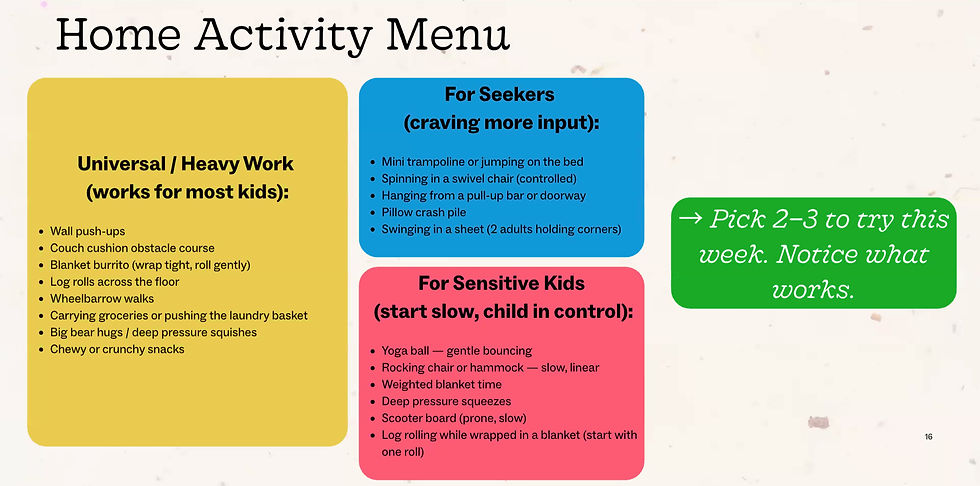
Poor balance, awkward gait, uncoordinated movement, and difficulty with motor skillsI have included some images below from recent webinar from Kinspire.
Strategies for Support
Occupational Therapy: A qualified OT can create a personalized "sensory diet".
Safe Movement Activities: Swings, trampolines, rocking chairs, and exercise balls can help, but should be introduced carefully to avoid overstimulation.
Routine: Consistent movement breaks and preparing children for changes in head position can reduce anxiety.



Comments